This post is also available in:
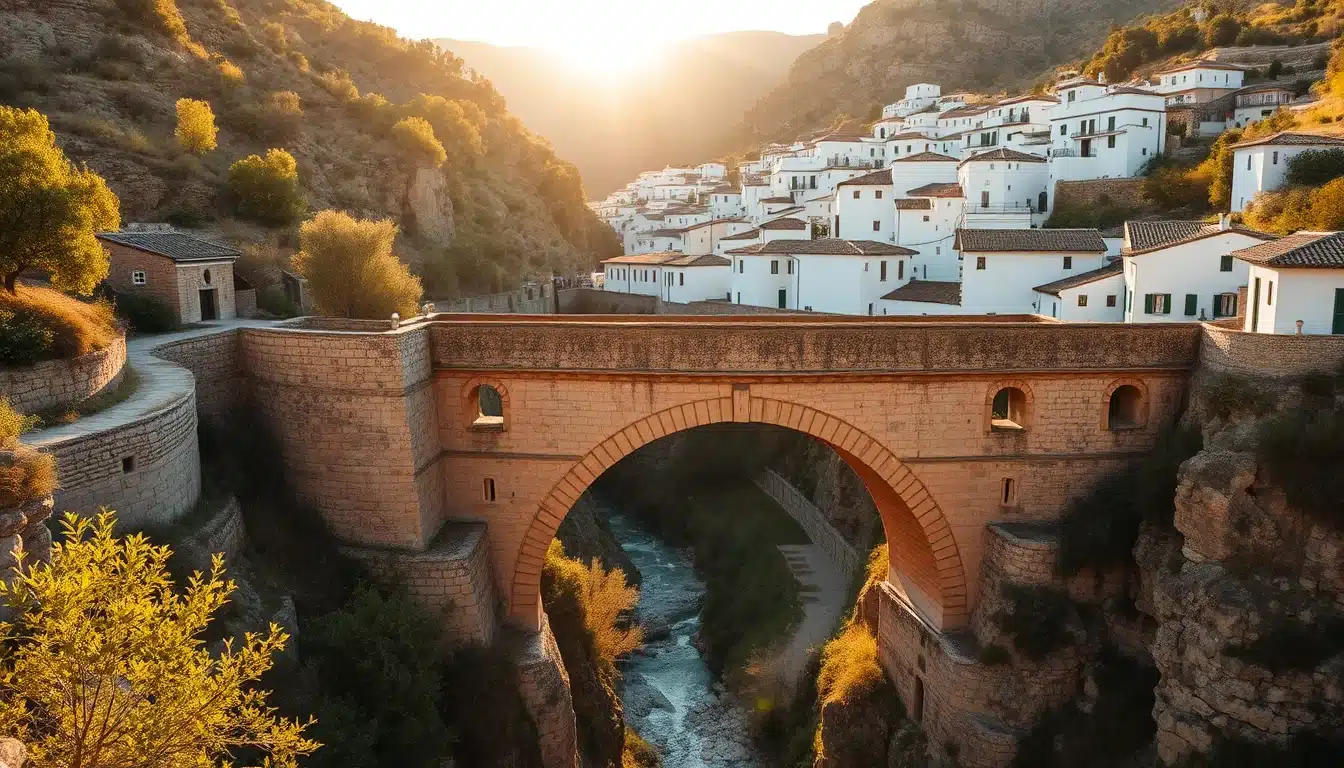
Hanging dramatically over the deep river gorge where the southern slopes of Sierra Nevada begin, Lanjarón is universally celebrated as the historic Gateway to La Alpujarra. World-renowned for the exceptional purity of its high-mountain mineral waters—so pure that ‘Lanjarón’ has become the synonym for bottled spring water across Spain—the town is a historic wellness retreat and vibrant mountain hub.
1. The Historic Balneario de Lanjarón (Thermal Spa)
Since the late 18th century, aristocrats, poets (including Federico García Lorca), and monarchs traveled to Lanjarón to take the waters. The Neo-Mudéjar Balneario de Lanjarón, nestled within century-old gardens, features six distinct natural mineral springs emerging from the earth, each with unique medicinal properties ranging from digestive health to rheumatic wellness.
2. Highlights & What to Do
- The Water Fountain Trail: As you stroll through the town, discover dozens of charming tiled drinking fountains inscribed with poetic verses by Lorca, all flowing with ice-cold mountain spring water.
- The Moorish Castle (Castillo de Lanjarón): Perched on a dramatic rocky crag south of the town, this 13th-century fortress withstood epic sieges during the Morisco rebellion.
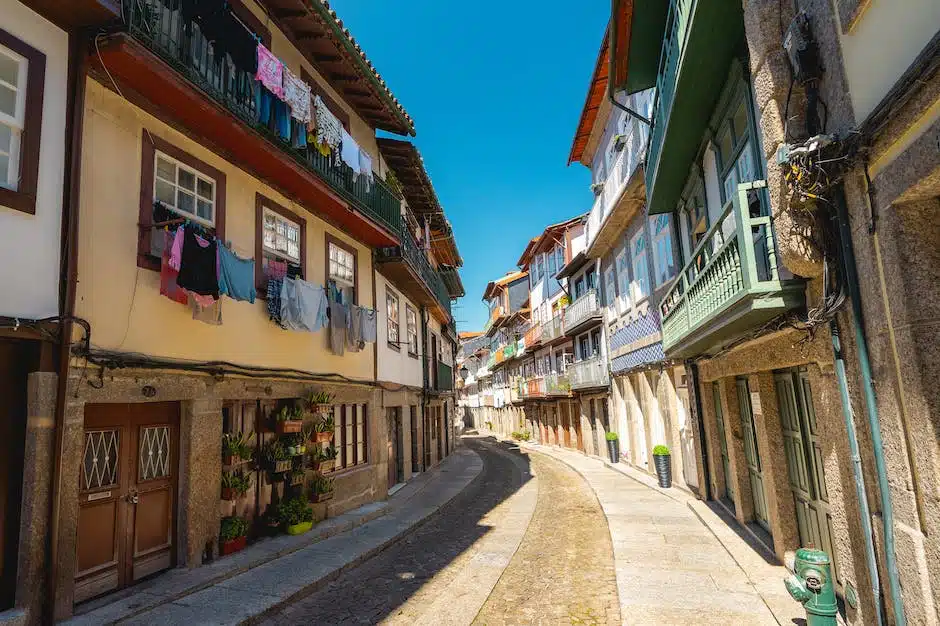
- El Barrio del Hondillo: The oldest traditional quarter of the town, featuring whitewashed alleys, low wooden tinaos, and cascading geraniums.
- The Water and Ham Festival (Fiesta del Agua y del Jamón): Held annually on Midsummer Night (June 23rd / San Juan), the entire town erupts into the largest public water fight in Spain! For exactly one hour at midnight, thousands of people soak each other with hoses, buckets, and water pistols.
Official Reference Sources & Institutional Verification
Information cross-referenced directly with competent public administrations and official governing bodies, ensuring maximum editorial accuracy and strict adherence to Google E-E-A-T guidelines.
Competent municipal administration: official notices, local heritage, registered walking paths, and patron festivals.
Public inter-municipal body: conservation of traditional Alpujarra architecture, hiking trails, and cultural routes.
Official regional public tourism board: hiking paths, cultural itineraries, and certified tourist office network.
Provincial government: municipal technical assistance, historic heritage conservation, and rural sustainability.