
This post is also available in:
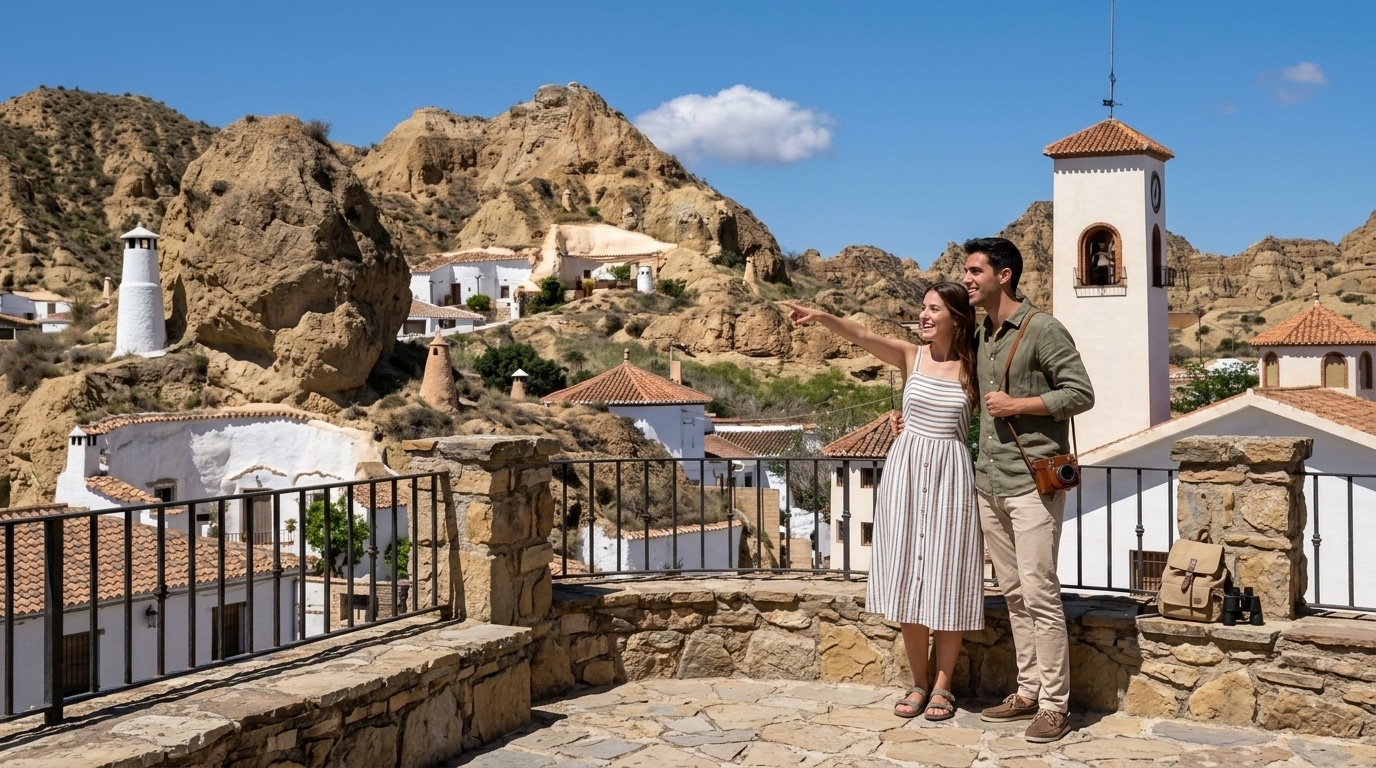
Located just 40 minutes east of Granada in a prehistoric basin carved with dramatic red-clay badlands and ravines, Guadix is one of the most astonishing human settlements on the continent. With over 2,000 inhabited subterranean cave homes, Guadix is recognized as the European Capital of maisons troglodytiques.
Above ground, a monumental sandstone cathedral and a 10th-century Moorish alcazaba rise against the snow-dusted Sierra Nevada peaks, creating an otherworldly landscape that has served as the filming location for dozens of classic Hollywood cinema productions (including Indiana Jones and the Last Crusade and classic Sergio Leone spaghetti westerns).
1. The Cave District (Barrio de las Cuevas)
Spread across the rolling clay hills, white conical chimneys sprout directly out of the earthy hillsides like surreal mushrooms. These whitewashed subterranean residences are still home to over 3,000 residents:
- Centro de Interpretación Cuevas de Guadix: An authentic municipal museum cave that lets visitors experience the history, architecture, and interior decor of traditional cave living.
- Mirador Padre Poveda & Mirador de la Magdalena: Elevated vantage points offering sweeping views across the sea of white chimneys set against the desert badlands.
- Staying in a Cave Hotel: Sleeping inside a modernized cave room is a singular experience: absolute acoustic silence, total darkness, and a natural, soothing year-round temperature of 18°C.
2. Guadix Cathedral & The Moorish Alcazaba
- Guadix Cathedral: A monumental sandstone basilica built between the 16th and 18th centuries by architects Diego de Siloé and Gaspar de la Peña, blending Gothic, Renaissance, and Baroque styles.
- The Alcazaba: A 10th-century red-clay fortress constructed by the Moors, providing commanding military vistas over the entire Hoya de Guadix basin.
Sources Officielles et Références Institutionnelles
Informations vérifiées directement auprès des administrations publiques compétentes pour garantir une rigueur éditoriale maximale et la conformité aux critères Google E-E-A-T.
Administration locale compétente : arrêtés municipaux, patrimoine local, sentiers communaux et fêtes patronales.
Organe de gestion du Géoparc UNESCO : préservation des badlands quaternaires, géosites et habitat troglodytique.
Organisme public officiel : sentiers balisés, circuits culturels et réseau des offices de tourisme.
Gouvernement provincial : assistance technique aux communes, préservation du patrimoine et voirie départementale.


