
This post is also available in:
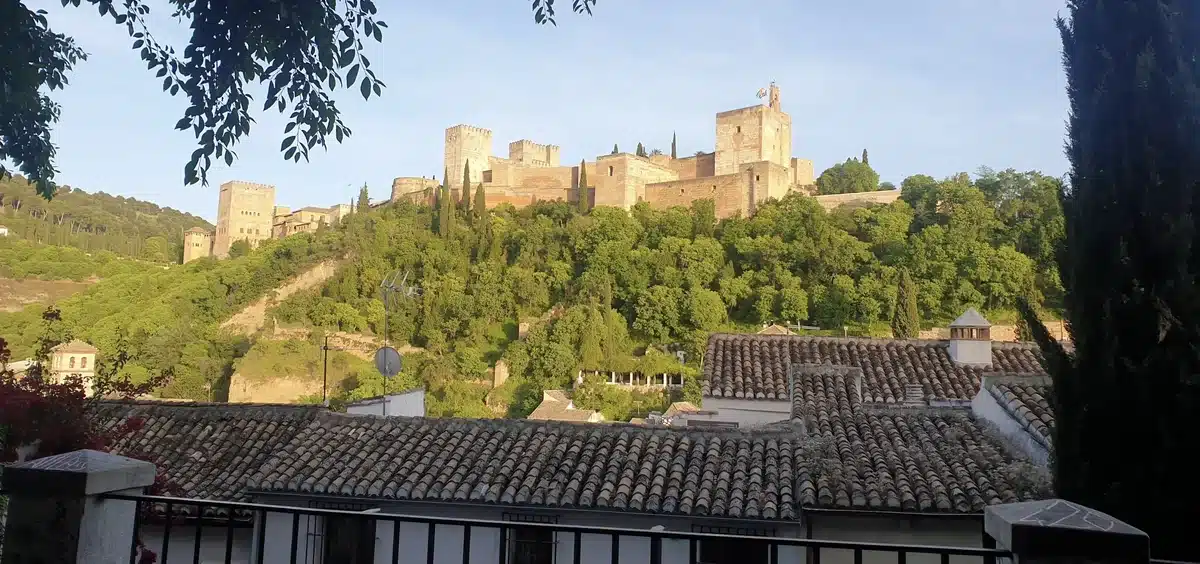
Clinging to the steep hillside facing the Alhambra, El Albaicín (or Albayzín) is the ancient Moorish medieval district of Granada. Together with the Alhambra and Generalife, it was inscribed on the UNESCO World Heritage list in 1984 as an extraordinary living testimony to medieval Islamic urbanism.
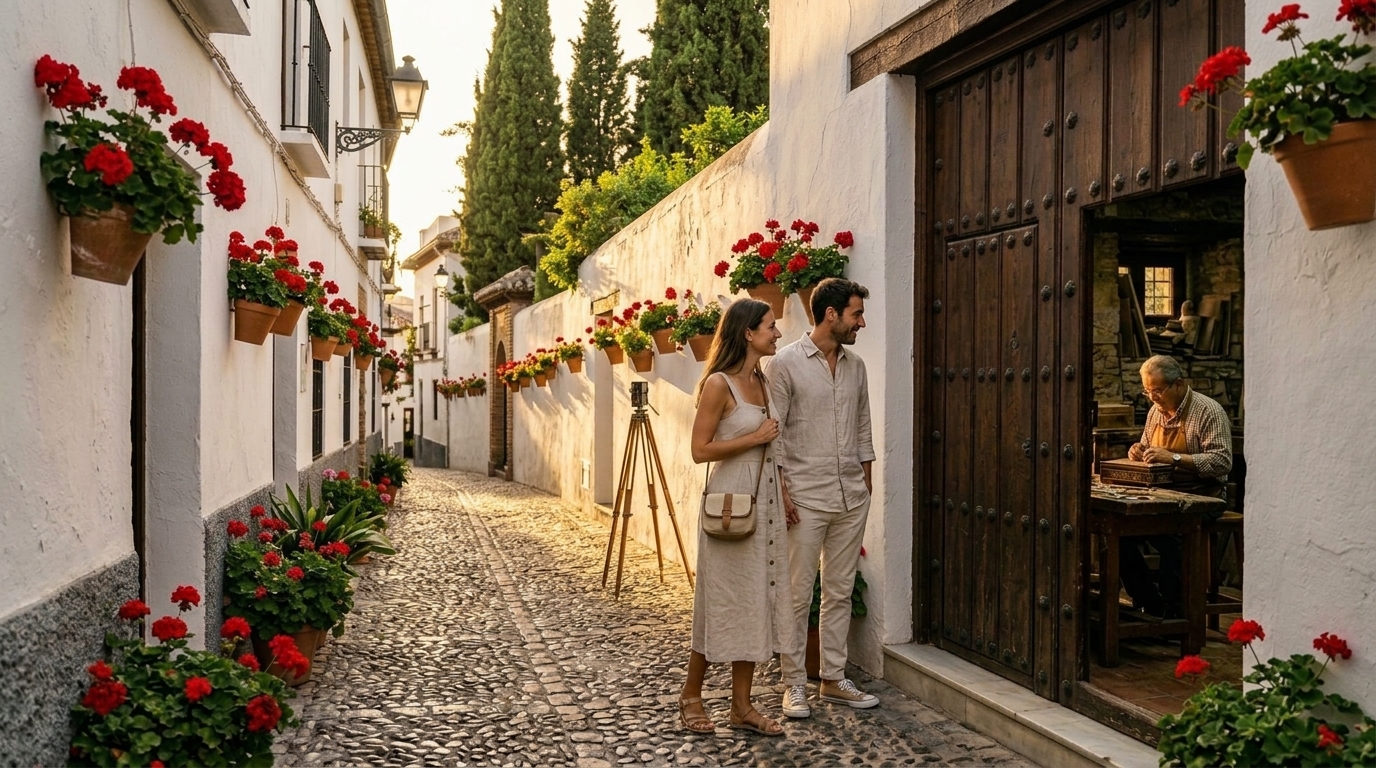
Wandering through the Albaicín is like stepping into another era. Its labyrinthine cobblestone alleys (empedrado granadino), high whitewashed walls concealing secret walled garden villas (cármenes), historic underground water cisterns (aljibes), and sudden belvedere panoramicos create a sensory journey unlike anywhere else in Spain.
1. Highlights of the Albaicín
- Mirador de San Nicolás: Granada’s most legendary viewpoint. Situated in front of the San Nicolás church, it offers the quintessential postcard view of the Alhambra set against the peaks of Sierra Nevada, accompanied by live flamenco guitarists.
- Plaza Larga: The vibrant heart of daily neighborhood life. Every morning, local vendors sell fresh fruit, flowers, and cheeses beside the Moorish stone archway of Arco de las Pesas.
- San Miguel Bajo: A charming, quiet square shaded by ancient horse-chestnut trees and surrounded by outdoor tapas terraces serving local dishes.
- Palacio de Dar al-Horra: The private 15th-century palace of Aixa la-Horra, mother of Boabdil, the last sultan of Granada. It features exquisite plasterwork, tile mosaics, and tranquil interior courtyards.
- El Bañuelo (Arab Baths): 11th-century Zirid hammam with octagonal star-shaped skylights, one of the oldest and best-preserved Moorish public baths in Spain.
Scorci dell'Albaicín e dell'Alhambra attraverso i Nostri Occhi


2. Walking Route: From Plaza Nueva to the Heights
To avoid getting overwhelmed by the steep climb, we recommend this scenic route:
- Start at Plaza Nueva and take the picturesque Carrera del Darro alongside the bubbling river.
- At the Paseo de los Tristes, turn uphill into the cobblestones of Cuesta del Chapiz.
- Visit the historic Casa del Chapiz with its peaceful gardens and reflecting pools.
- Wander along Calle Panaderos towards Plaza Larga and finish at Mirador de San Nicolás for sunset.
3. Practical Advice for Visitors
Footwear: Wear comfortable walking shoes with excellent grip. The traditional Granadino cobblestones (rounded river pebbles) can be slick, especially when descending steep slopes.
Transport: Take the red microbus Line C31 or C32 from Plaza Nueva if you wish to ride directly up to San Nicolás and walk down at a leisurely pace.
Fonti Ufficiali e Riferimenti Istituzionali di Consultazione
Informazioni verificate direttamente con le pubbliche amministrazioni competenti per garantire il massimo rigore editorial e la piena conformità ai criteri Google E-E-A-T.
Fondazione titolare: Sante Grotte, Libri di Piombo del XVI secolo, museo d'arte sacra e tomba di Pedro de Castro.
Pianificazione e salvaguardia del quartiere Patrimonio Mondiale: carmenes, belvedere e antiche cisterne.
Tutela del patrimonio culturale immateriale: zambras gitane del Sacromonte, circoli storici e festival di canto.
Museo delle grotte: abitazioni rupestri tradizionali, artigianato del vimini e della forgia e storia gitana.


