This post is also available in:
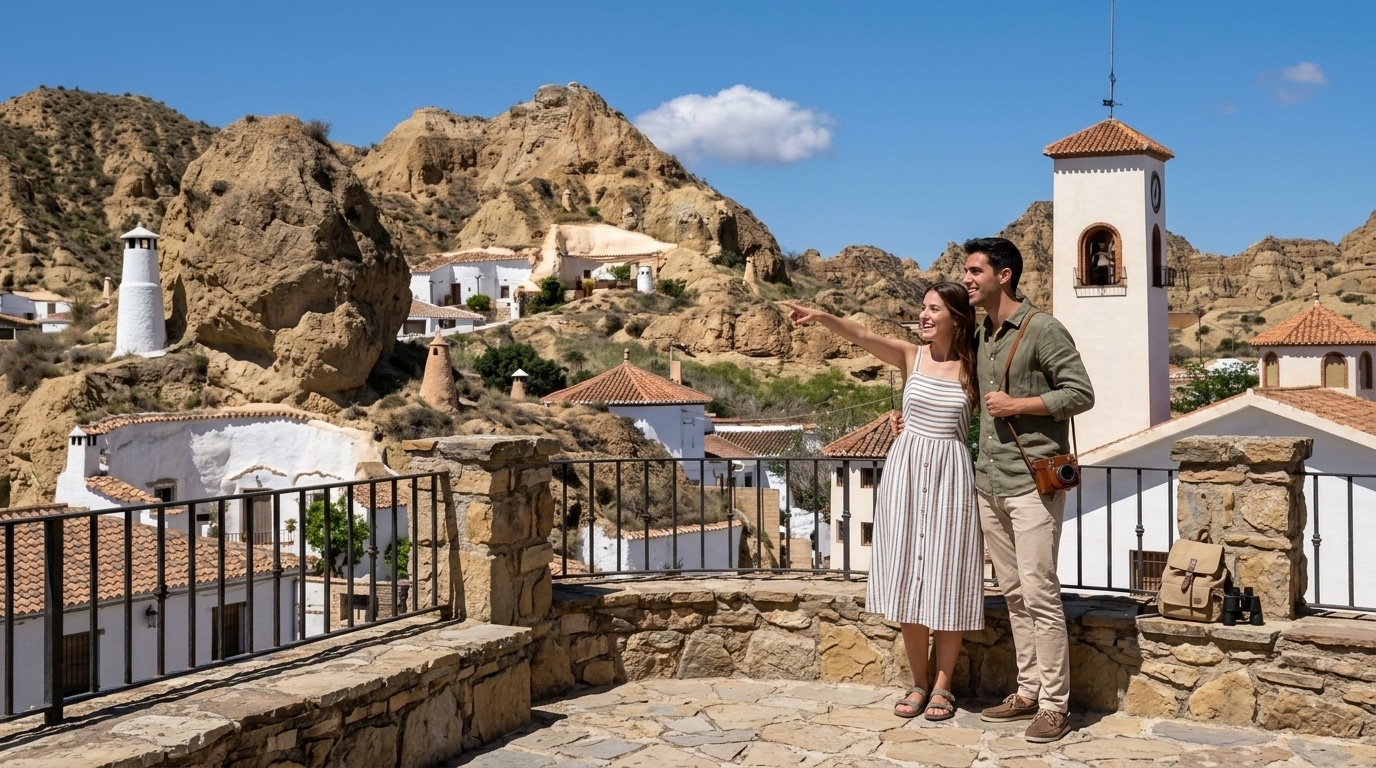
With more than 2,000 inhabited casas-cova (casas-cova (casas cueva)) carved out of the clay hillsides, Guadix is widely recognized as the European capital of casas-cova (casas-cova (casas cueva)) (hábitat troglodita). Located just 40 minutes east of Granada in the heart of the UNESCO Granada Geopark, the Barrio de las Cuevas looks like a fairytale fantasy, where gleaming white chimneys and whitewashed doorways poke out directly from dramatic ochre cliffs.
The Magic of Living Underground: Natural Bioclimatic Architecture
Carved by hand into soft clay rock layers (arcillas y conglomerados) since the 16th century following the fall of Granada, these cave homes are remarkable feats of bioclimatic architecture. Because they are insulated by thick layers of earth, their interior temperature remains naturally regulated at a pleasant 18°C to 20°C year-round—cool during blistering summer heat and warm throughout freezing winter mountain nights.
Top Places to Visit in the Cave Quarter
- Centro de Interpretación Cueva-Museo: A masterfully restored traditional cave museum in Plaza Padre Poveda showing original furnishings, weaving looms, bread ovens, and everyday tools of 19th-century cave life.
- Mirador Padre Poveda: The ultimate viewpoint overlooking a surreal landscape of hundreds of white chimneys sprouting from grassy clay mounds, backed by the snowy crest of Sierra Nevada.
- Cueva de San Pedro Poveda: The historic hermitage-cave where Saint Pedro Poveda founded schools and workshops for the cave community in the early 1900s.
How to Visit & Experience a Cave Hotel
Guadix is easily reached via the A-92 motorway from Granada (45 minutes by car or direct ALSA bus). For the ultimate experience, book a night in an authentic luxury cave hotel (hotel cueva) with modern amenities, indoor fireplaces, and private thermal baths.
Fontes Oficiais e Referências Institucionais de Consulta
Informações confirmadas diretamente junto das administrações públicas competentes para garantir o máximo rigor editorial e conformidade estrita com os critérios Google E-E-A-T.
Administração municipal competente: avisos municipais, património local, percursos pedestres e festas locais.
Órgão de gestão do Geoparque UNESCO: conservação de fósseis do Quaternário, badlands e património em casas-cova.
Entidade pública oficial de turismo: percursos pedestres, roteiros culturais e rede de postos de turismo.
Governo provincial: assistência técnica aos municípios, património histórico, estradas e sustentabilidade rural.